The Golden Isthmus
‘Do but open these doors, and trade will increase trade,
and money will beget money’
Scottish Promoter William Paterson, 1698
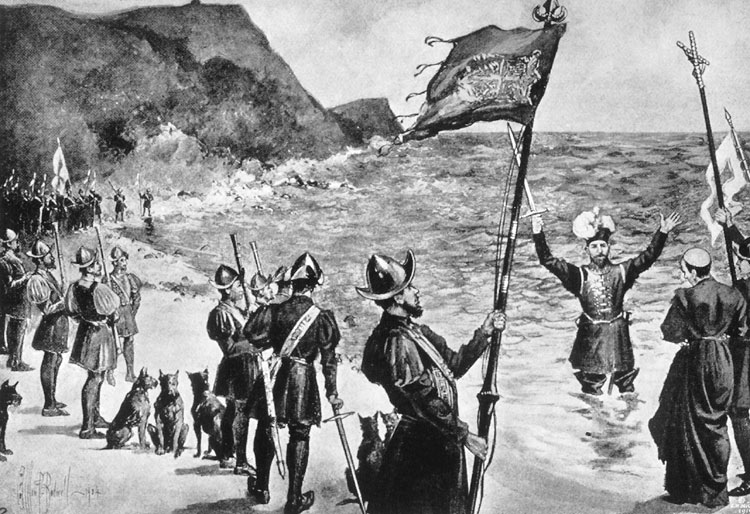
In September 1513, Spanish conquistador Vasco Núñez de Balboa discovers the ‘South Sea’ and that Panama is a tantalisingly narrow isthmus. The transit route between the Pacific and Atlantic oceans quickly became the most important thoroughfare in the Spanish Empire and the focus of a fierce geo-political struggle.
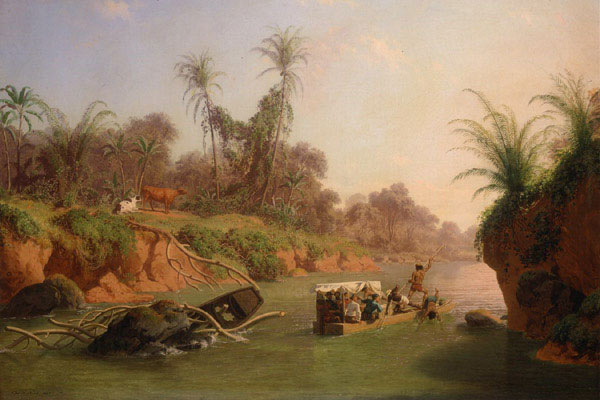
Crossing the Isthmus using the Chagres River. With the discovery of gold in California, Panama – the quickest route from East to West US coast – was soon swarming with ’49ers’.
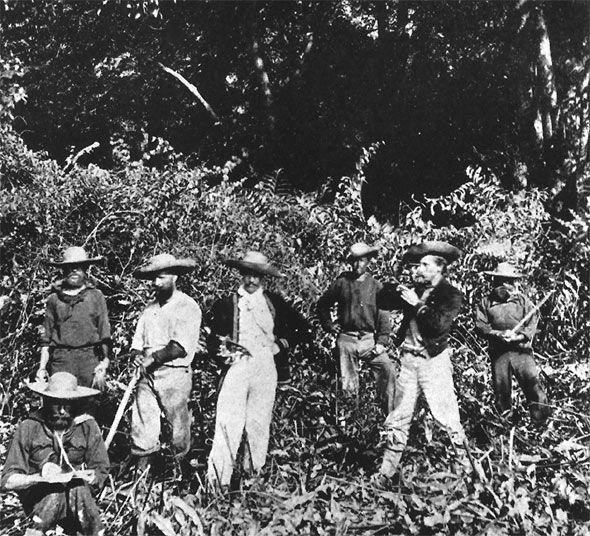
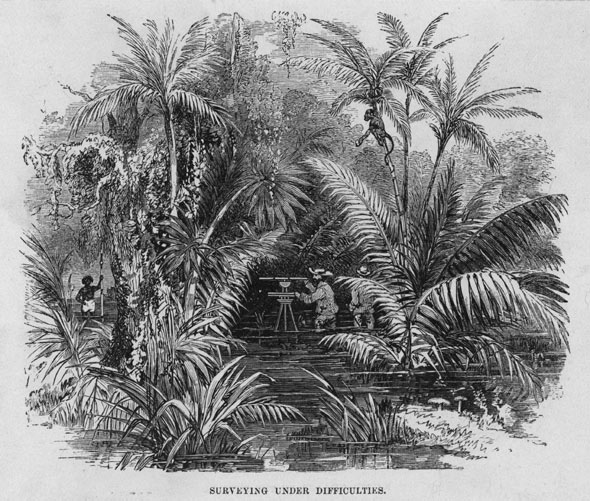
Mapping the route for the Panama railroad through thick jungle and swamp. Built in five years between 1850 and 1855, it cost thousands of lives but made a fortune for its owners.
The French Tragedy
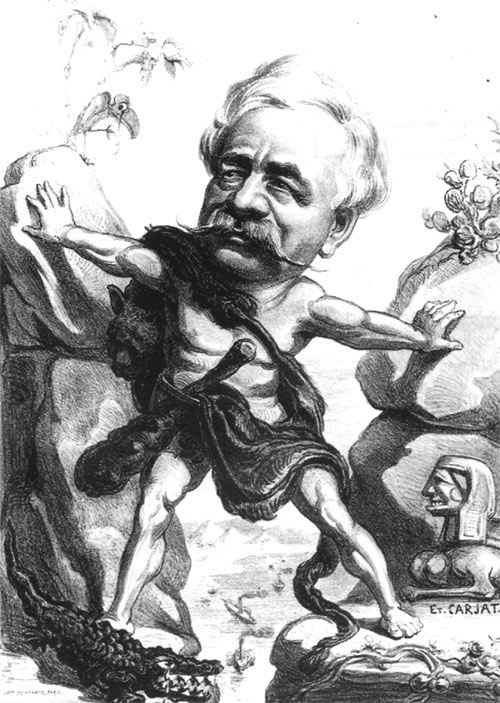
Ferdinand de Lesseps depicted as Hercules separating the two continents. Riding a wave of public adulation after his triumph at Suez, de Lesseps had the charisma and force of will to make the Panama dream a reality. 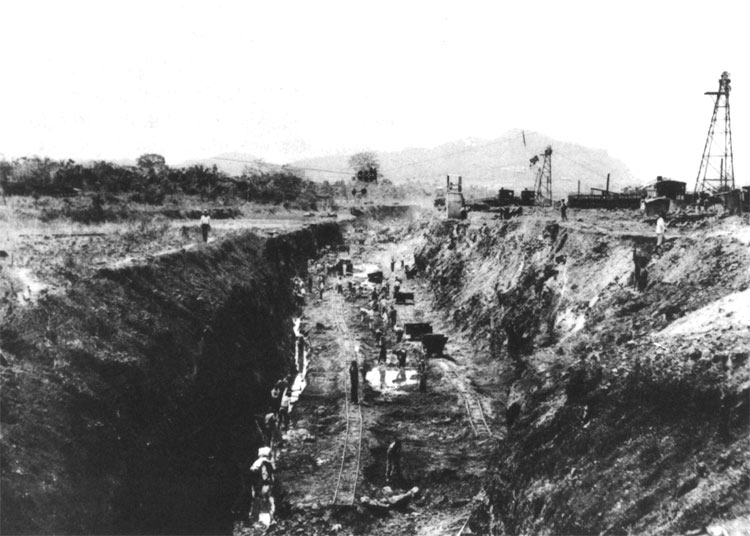
The beginning of the ‘big ditch’. The French aimed to build a sea-level canal, but massively underestimated the task ahead. 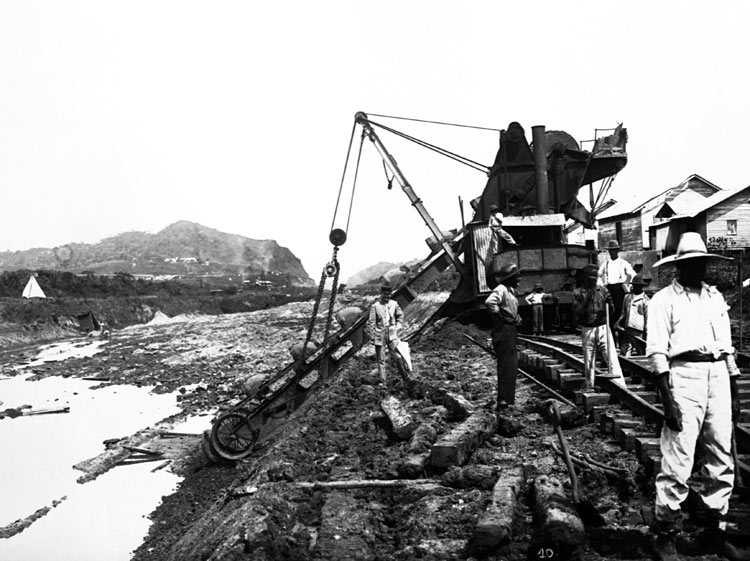
A French ladder excavator. The machines that had triumphed at Suez proved unable to cope with the heavy clays of the Chagres valley. Most work had to be carried out by hand, and soon the labourers were dying in their thousands. 
With the press running for cover, the directors of the Canal Company, led by Ferdinand de Lesseps, are brought to trial. Eiffel brings up the rear. The collapse of the canal company led to a fever of recriminations in France.
The American Triumph
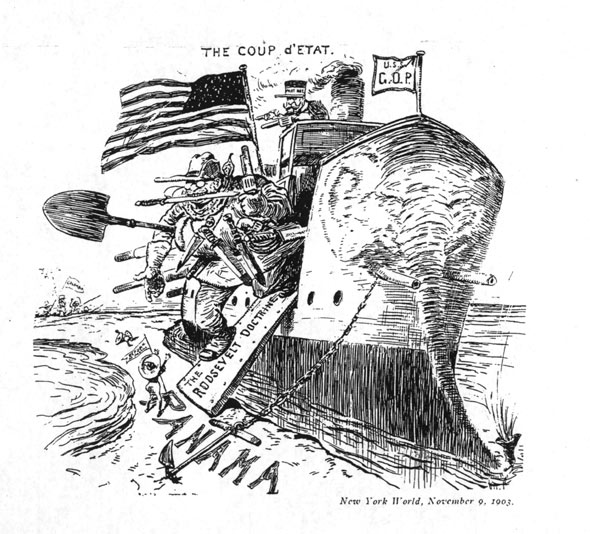
In a cartoon published six days afterwards, the New York World gives its impression of the ‘Panama Revolution’. The United States’ bullying and aggression over the canal sowed a long legacy of distrust and fear. 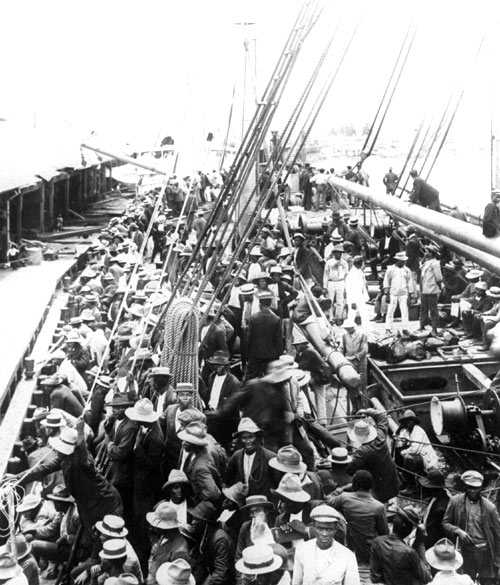
A steamer carrying labourers from Barbados arrives at Colón. The tiny island provided the bulk of the thousands of workers for the American Panama Canal effort. Treated as cheap and expendable by the Americans, the West Indians were also subjected to racial segregation. 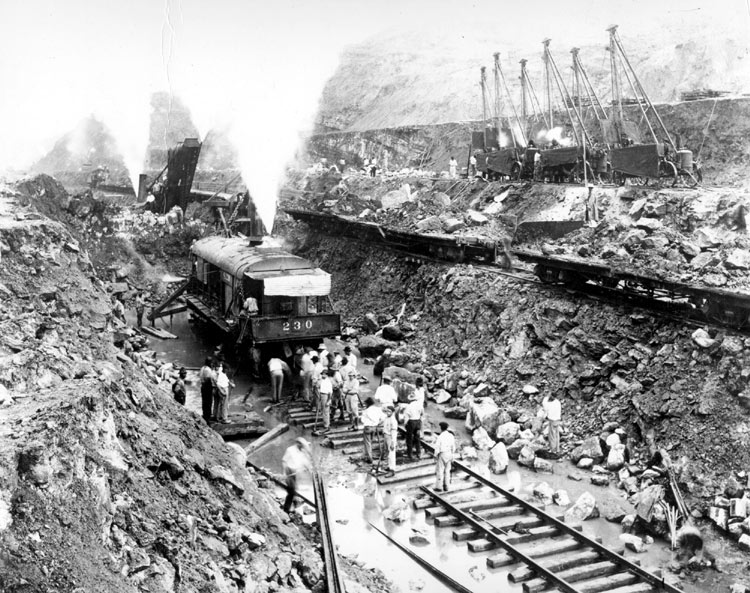
At 4.30p.m. on 20 May 1913, working at the final depth of the canal, shovels No. 222 and No. 230 meet ‘nose to nose’ at the centre of the Cut. 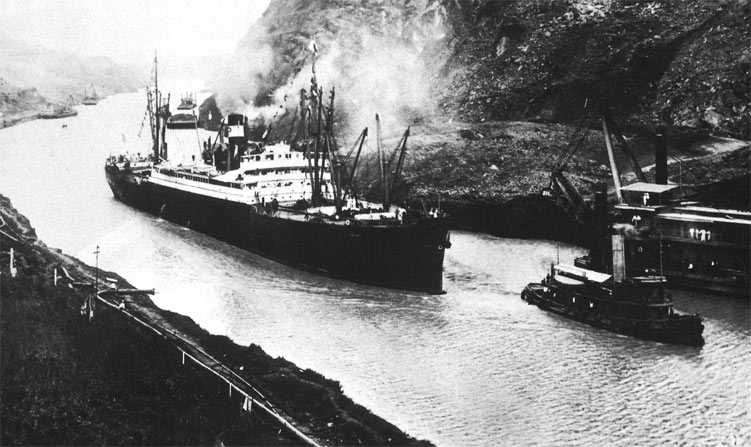
The opening of the canal: S.S. Ancon passes the remnants of the Cucaracha slide on 15 August 1914. Landslides came close to wrecking the American effort. 
The New Expansion Plan
A megaproject, the most ambitious engineering work in Panama since the canal’s original construction. Budget is set at $5,200 million, in real terms similar to the cost of the original canal ($400m in 1914). No doubt this figure will rise and rise. Work is due to be completed by 2014.
The new plan aims to double the canal’s capacity. Though in 1934 it was estimated that the maximum capacity of the canal would be around 80 million tons per year, canal traffic in 2005 consisted of 278.8 million tons of shipping (15000 vessels) The estimate is that it will be running at full capacity by 2009. Queues form out to sea of ships waiting to cross the Isthmus. In early 2007 a British ship captain with an urgent cargo paid $200,000 in an auction to jump the queue, on top of his toll of another $200,000.
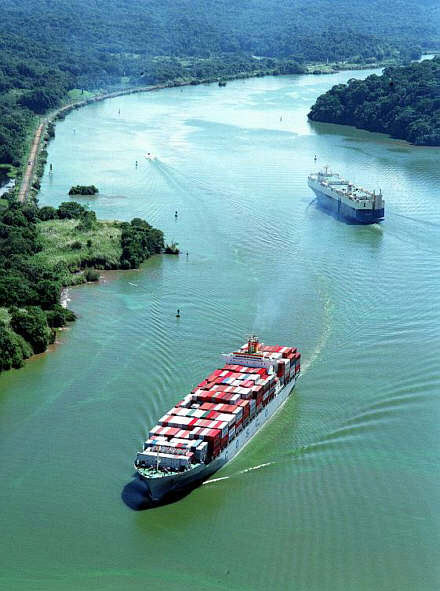
The second aim is to allow it to take bigger vessels. The trend towards post-Panamax ships seems irreversible. Half of the orders for new container ships up to 2011 are post-Panamax monsters. Current Panamax container ships take 4,500 containers; new capacity is for ships with 12,000.
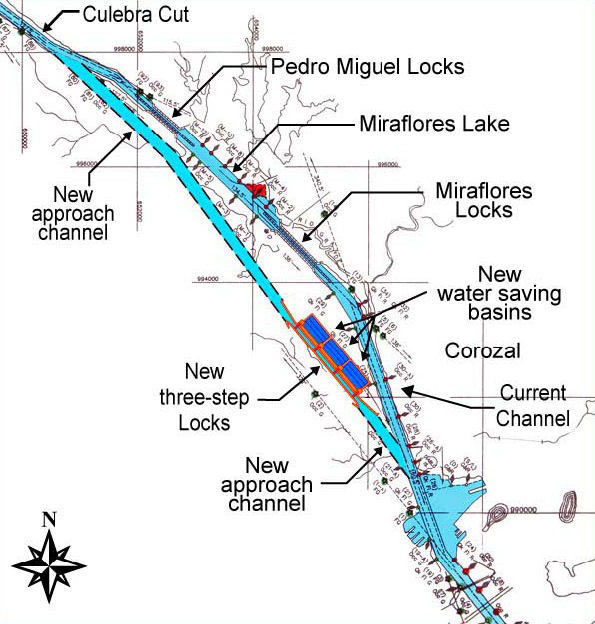
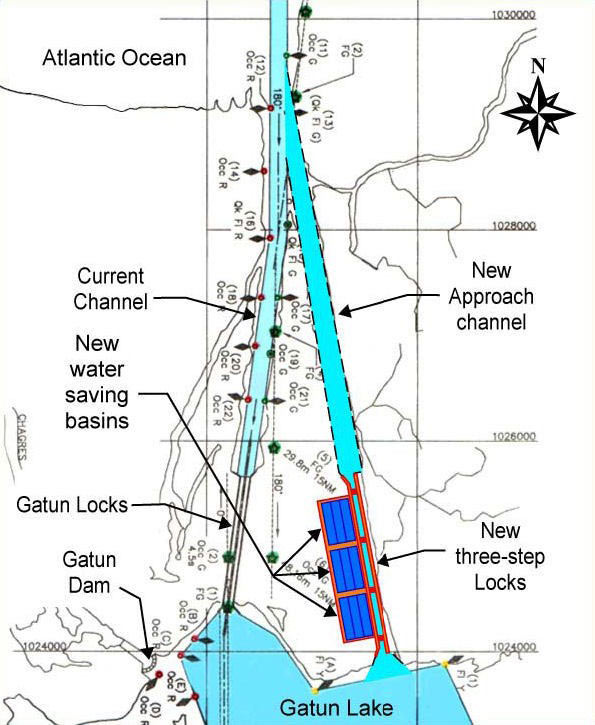
The key element is the construction of two new lock complexes at either end of the high lake, each with three chambers, which include water-saving basins. The new lock’s chambers will be 427m (1,400’) long, by 55m (180’) wide, and 18.3m (60’) deep. They are only a few feet smaller than the biggest lock in the world.
There is also to be widening of the Culebra Cut, and access channels need to be dug to the new locks, eight miles long at the Pacific end and three miles at the Atlantic end.
To increase the available water, the elevation of Gatún Lake is to be raised by about half a metre, requiring new spillway, adjustments to the locks and substantial relocation of roads and railway.
For the detailed plan see: http://www.pancanal.com/eng/plan/index.html
 Matthew Parker